

Hitch & Tow
Check Out Our Other Collections

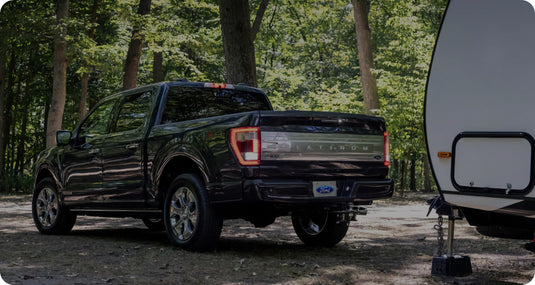
Hitch & Tow
Premium Hitch & Tow Equipment - RV Trader Accessories
3,300+ Towing Solutions • Trusted Brands • Vehicle-Specific Fit • Free Shipping Available
Find the right hitch and towing equipment from over 3,300 products including receiver hitches, tow bars, winches, and brake systems. We carry Blue Ox, CURT, Rigid Hitch, KFI, Viper, and more trusted brands for RVs, trucks, ATVs, and trailers.
Why Choose RV Trader Accessories for Your Towing Needs
When you're towing an RV, trailer, boat, or ATV, the right equipment isn't optional – it's the difference between a safe trip and a dangerous situation. We stock over 3,300 hitch and tow products because serious towers need serious options.
Our selection covers everything from lightweight Class I hitches for bike racks to heavy-duty gooseneck systems for commercial trailers. You'll find vehicle-specific receiver hitches from Rigid Hitch (made in Minnesota), complete Blue Ox tow bar systems for flat-towing behind RVs, and KFI winches rated up to 5,000 lbs for ATVs and UTVs.
We carry brands that RV owners and professional haulers actually use: CURT for custom-fit receiver hitches, Draw-Tite for weight distribution systems, Reese for fifth-wheel connections, and Tekonsha for electronic brake controllers. Whether you're setting up a new truck for towing or replacing worn components, you'll find what fits your vehicle and your load.
Many of our hitches come with manufacturer warranties – Rigid Hitch offers a 5-year limited warranty on their receivers and ball mounts. Blue Ox backs their tow bars with strong warranty coverage. Check individual product pages for specific warranty details.
How Trailer Hitches Work
A trailer hitch creates a secure mechanical connection between your vehicle and whatever you're towing. The system has three main parts: the receiver (mounted to your vehicle's frame), the ball mount or drawbar (slides into the receiver), and the coupling mechanism (ball, pintle hook, or fifth-wheel connection).
Receiver hitches bolt directly to your vehicle's frame using mounting points designed by the manufacturer. The receiver tube (that square opening at the back of your vehicle) accepts different ball mounts, cargo carriers, or bike racks. Class ratings indicate weight capacity – a Class III hitch with a 2" receiver typically handles 3,500-8,000 lbs depending on the specific model and your vehicle's limits.
For RV flat towing, a tow bar connects the front of your car or truck to the back of your motorhome. The tow bar attaches to a baseplate mounted on your towed vehicle's frame, then connects to the RV's hitch receiver. Blue Ox's popular Alpha 2 tow bar folds away when not in use and includes self-aligning pins for easier hookups.
Weight distribution hitches use spring bars to transfer some of the trailer's tongue weight from the rear axle to the front axle and trailer axles. This keeps your vehicle level, improves steering control, and prevents the rear from sagging under heavy loads. These systems are recommended when your trailer's tongue weight exceeds 10% of your vehicle's rear axle capacity.
The wiring harness provides electrical connection between your vehicle and trailer, powering running lights, turn signals, brake lights, and electric brakes. A 4-way flat connector covers basic lighting, while 7-way round connectors add electric brake control, auxiliary power, and reverse lights.
Always match your hitch class to both your vehicle's towing capacity (check your owner's manual) and what you're hauling. Your towing capacity is limited by the weakest link – whether that's your hitch, ball mount, vehicle rating, or trailer capacity.
Tips for Selecting and Using Towing Equipment
Start by knowing your vehicle's maximum towing capacity and tongue weight rating – these numbers are in your owner's manual and shouldn't be exceeded. Your hitch class should match or exceed what you're towing, but remember that installing a higher-class hitch doesn't increase your vehicle's towing capacity.
Choose the right receiver size for your needs. Class I and II hitches use 1-1/4" receivers for lighter loads up to 3,500 lbs. Class III, IV, and V hitches use 2" or 2-1/2" receivers for heavier towing. You can use adapter sleeves to fit smaller accessories in larger receivers, but never go the other way.
Match your hitch ball size to your trailer coupler exactly – common sizes are 1-7/8", 2", and 2-5/16". The size is stamped on the ball and coupler. Using the wrong size creates an unsafe connection even if it seems to fit. Your ball mount's rise or drop should position the trailer level when connected – an unlevel trailer affects handling and brake performance.
For RV flat towing, verify that your vehicle is approved for flat towing by the manufacturer. Not all vehicles can be towed with all four wheels down – some require a dolly or trailer. Install a proper baseplate specific to your vehicle's make, model, and year. Generic baseplates don't exist because mounting points vary.
If you're towing more than 5,000 lbs or if your loaded trailer pushes down heavily on the ball mount, consider a weight distribution hitch. Signs you need one include headlights pointing up, difficulty steering, or the rear of your vehicle sitting noticeably lower when hitched up.
Install a brake controller if your trailer weighs over 1,500 lbs or if your trailer has electric brakes. The controller lets you activate trailer brakes independently and adjusts braking power based on load. Proportional controllers provide smoother braking than time-delayed models.
Maintenance matters: grease your hitch ball a few times per year, inspect safety chains for wear, check wiring connections before each trip, and torque hitch bolts to manufacturer specs. Remove your ball mount when not towing to prevent rust in the receiver tube.
Learn More About Hitch & Tow Equipment
Product Categories
- Fifth Wheel Hitches
- Receiver Hitches
- Tow Bars & Baseplates
- Winches
- Weight Distribution Systems
- Trailer Brake Systems
Top Brands
- Blue Ox Tow Bars
- CURT Manufacturing
- Rigid Hitch
Quick Links
Ball Mounts | Hitch Balls | Trailer Wiring | Pintle Hitches | Gooseneck Hitches | Sway Control | Hitch Locks
Frequently Asked Questions
What class hitch do I need for my vehicle? Your hitch class depends on what you're towing and your vehicle's capacity. Class I and II (up to 3,500 lbs) work for small trailers on cars and crossovers. Class III (3,500-8,000 lbs) fits most SUVs and trucks towing campers. Class IV and V handle heavy trailers on full-size trucks. Check your owner's manual for your vehicle's maximum towing capacity.
Can I install a trailer hitch myself? Many receiver hitches bolt directly to your vehicle's frame with basic tools and take 1-3 hours to install. If you're not comfortable working under your vehicle or lack jack stands, professional installation takes about 2 hours at most hitch shops.
What's the difference between a tow bar and a trailer hitch? A trailer hitch mounts to your towing vehicle for pulling trailers. A tow bar connects a vehicle to the back of an RV for flat towing. You need both systems if you're towing a car behind your motorhome – the RV has the receiver hitch, and the towed vehicle gets a baseplate and tow bar connection.
Do I need a weight distribution hitch? Yes, if your trailer causes rear sag, headlights point upward when hitched, or steering feels unstable. Most experts recommend weight distribution for trailers over 5,000 lbs or when tongue weight exceeds 10% of your rear axle rating. Read our complete guide to weight distribution hitches for setup tips.
What size hitch ball do I need? Check your trailer coupler for the stamped size – common sizes are 1-7/8", 2", and 2-5/16". The ball and coupler must match exactly. Also verify the ball's weight rating meets your trailer's gross weight and the shank diameter fits your ball mount.
Can any vehicle be flat towed behind an RV? No – check your vehicle's owner's manual for flat towing approval. Some vehicles can be towed with all four wheels down, others need a dolly, and some can't be towed at all. If approved, you'll need a vehicle-specific baseplate, tow bar, safety cables, and supplemental braking system. Learn more about flat towing setup in our detailed guide.
What's a 4-way vs 7-way trailer connector? A 4-way flat connector provides basic lighting (running lights, brake lights, turn signals, ground). A 7-way round connector adds electric brake control, auxiliary power, and reverse lights. Use 7-way for travel trailers or any trailer with electric brakes.
How much weight can I tow with a Class III hitch? Class III hitches range from 3,500 to 8,000 lbs depending on the model. Your actual capacity is limited by your vehicle's maximum rating, not the hitch. A Class III hitch rated for 8,000 lbs on a vehicle that can only tow 3,500 lbs means you're limited to 3,500 lbs.
What maintenance do trailer hitches need? Grease your hitch ball 2-3 times per year, spray the receiver tube with rust inhibitor, check safety chains for damage, inspect wiring before trips, and torque mounting bolts annually. Remove ball mounts when not towing to prevent theft and corrosion. Check out our hitch maintenance checklist for the complete schedule.
Can I use Class III accessories with a Class IV hitch? Yes – Class III and IV hitches both have 2" x 2" receivers, so accessories are interchangeable. The difference is weight rating. Always ensure your ball mount's capacity meets or exceeds what you're towing, and never exceed the lowest-rated component in your system.
Sources & References
SAE International - SAE J684 Trailer Hitch Standard (2020) www.sae.org/standards/content/j684_202001
National Highway Traffic Safety Administration - Trailer Towing Guide www.nhtsa.gov/equipment/towing
Ready to set up your towing system? Browse our complete selection of hitches, tow bars, winches, and accessories above, or use the category filters to find exactly what you need for your vehicle and trailer.
