

Jacks Leveling & Chocks - RV
Check Out Our Other Collections

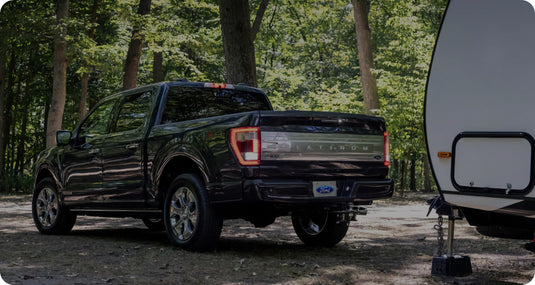
Jacks Leveling & Chocks - RV
Jacks, Leveling & Chocks
Getting a travel trailer or utility trailer set up at camp comes down to three things done in the right order: level the trailer on the wheels first, chock the wheels before you disconnect, then drop the stabilizer jacks once everything is level. Skip a step or mix up the sequence and you're either dealing with a rig that rocks every time someone climbs in, or worse - a trailer that shifts off leveling blocks after the tow vehicle pulls away.
This collection covers every piece of hardware in that process: tongue jacks for lifting and hitching, stabilizer jacks for corner support, wheel chocks from simple rubber wedges to leveling-chock combos, electric jacks for both tongue and stabilizer applications, jack support pads, and specialty hardware including heavy-duty hydraulic power units and the Fastway Flip folding jack foot. Brands include Ram, Bulldog, Wallace Forge, Stillwell, Fastway, Camco, Husky, Valterra, and Caliber - sourced through Rigid Hitch.
The One Rule That Protects Your Trailer Frame
Before getting into specific products, there's a distinction that every trailer owner needs to have right: stabilizer jacks are not leveling jacks, and using them as such can bend the trailer frame.
Tongue jacks and leveling - Your trailer gets leveled at the wheels (side-to-side with blocks or leveling ramps) and at the tongue (front-to-back via the tongue jack or landing gear). The trailer's frame is engineered to handle load at the wheel/axle points and at the tongue.
Stabilizer jacks - Corner stabilizers are deployed after the trailer is already level, to minimize rocking and movement caused by people walking around inside. They make contact with the ground to take out the bounce - they do not lift the trailer, and they are not rated to support its full weight.
Trying to level a trailer by cranking corner stabilizers up into the frame bypasses the suspension and puts stress on frame rails that aren't designed to take it at that point. Level first. Chock. Then stabilize.
Tongue Jacks
The tongue jack mounts to the front A-frame of the trailer and does the real work: lifting the coupler high enough to connect to the tow ball, and supporting the tongue weight of the trailer when it's parked. Most tongue jacks on travel trailers are A-frame mounted with a fixed bracket; some applications use swivel-mount or weld-on designs for boat trailers, utility trailers, and custom builds.
Manual A-Frame Tongue Jacks
The Ram A-Frame Top Wind Jack at 2,000 lb lift capacity is the standard direct-replacement option for most mid-size travel trailers and utility trailers. Top-wind means the crank handle is at the top of the jack body - the more common configuration on A-frame trailers because it keeps the handle accessible above the tongue frame.
For heavier applications, this collection carries Ram A-Frame jacks in a 3,000 lb lift / 5,000 lb support capacity range in two configurations: one with a wheel (useful on packed gravel or asphalt where rolling the jack during adjustment is easier), and one with a foot and mounting hardware for permanent installations. The taller version of the 3,000 lb lift A-frame jack adds extra travel for trailers with a higher tongue height.
The 5,000 lb capacity A-frame jack with 15-inch travel covers heavier trailers that need more range of motion, such as larger bumper-pull travel trailers and toy haulers with high tongue weights.
The RAM A-Frame Trailer Jack with bracket (2,000 lb capacity) is the budget-entry replacement option - priced for straightforward swaps on utility and light cargo trailers.
Side-Mount and Swivel-Mount Jacks
The Pro Series Utility Trailer Jack (1,000 lb lift, side-wind, bolt-on, 10-inch travel) is a side-mount jack suited for lighter utility, landscape, and cargo trailer applications where an A-frame mount isn't the right configuration. Side-wind means the crank operates from the side rather than the top - common on smaller trailer tongues where clearance at the top is limited.
For marine trailers specifically, the Ram Marine Bolt-On Swivel Jack (1,000 lb capacity) is built for boat trailer applications. The swivel design allows the jack to rotate out of the way when not in use, keeping it clear of the road during towing.
Two weld-on swivel bracket jacks from Ram (2,000 lb capacity, top-wind) are available for fabricators and shops building custom trailers or replacing jacks on frames without existing mounting plates. One uses a swivel bracket mount; the other is a direct weld-on bracket design.
Heavy-Duty Jacks
The Ram Square Tube Drop Leg Jack (7,000 lb capacity, top-wind, weld-on) and the Wallace Forge Heavy-Duty Square Mount Jack (12,000 lb, side-wind, side-pull) are the workhorses of this collection - built for heavy equipment trailers, livestock haulers, and commercial applications where standard trailer jacks aren't rated high enough.
The Ram Heavy-Duty Single-Speed Companion Square Tube Jack (full capacity listed on-page) covers companion or rear-position jack applications on multi-jack setups for gooseneck and larger bumper-pull trailers.
Electric Tongue Jacks
Two 3,500 lb electric tongue jacks are available in this collection, priced at two different price points. Electric tongue jacks replace the crank with a motor-driven mechanism operated by a button or switch - useful for frequent travelers who set up and break down camp regularly, for anyone with physical limitations that make cranking difficult, or simply for shaving time off the setup routine.
The Bulldog Electric Trailer Tongue Jack (top of the collection by capacity) is the premium option here - Bulldog is a long-established tongue jack brand owned by Cequent/TriMas, known for durability on demanding towing applications. Electric tongue jacks draw power from the trailer's 12V battery, so a healthy battery is part of the equation. Confirm that your trailer's battery is in good shape before relying on an electric jack at a remote campsite.
Stabilizer Jacks
Stabilizer jacks deploy at the corners (and sometimes mid-frame) of the trailer after it's level to take out the bounce and sway that comes from movement inside. They're the difference between a rig that feels solid underfoot and one that rocks noticeably every time someone walks from the bedroom to the kitchen.
Flip-Down Stabilizer Jacks
The Stabilizer Trailer Jacks in flip-down style (sold as pairs) are the most common corner stabilizer design for travel trailers. The jack swings down from a stored position and is cranked into contact with the ground by hand. The pair available here is rated at 650 lb lift / 1,000 lb support capacity per jack - appropriate for the stabilizer role, which is contact-and-support, not lifting.
Two configurations are available: one pair with a handle included, one pair without. Unless you already have a jack handle or are replacing jacks on a rig that uses an existing handle, the pair with the handle is the practical choice.
Telescoping Stabilizer Jacks
The Telescoping Stabilizer Jack pair (rated at 2,000 lb capacity) and the single Stabilizer Jack (Telescopic 2K capacity) use a telescoping tube design that extends to accommodate a wider range of trailer heights without requiring a separate handle crank in all cases. The telescoping design handles more height variation than fixed-extension flip-down jacks, making them useful on trailers with higher frame clearance or uneven sites.
Wheel Chocks
Wheel chocks go in before you disconnect the tow vehicle. They keep the trailer from rolling forward or backward off leveling blocks once the tongue is unhitched, and they hold position on sloped sites where gravity is working against you. Chock the wheels on both sides - in front of and behind the tire on the downhill side at minimum, both sides for maximum security.
Standard Rubber and Plastic Chocks
Valterra Wheel Chock - A simple, cost-effective rubber chock. Good for flat or near-flat sites where you just need a basic stop in place before disconnecting.
Husky Wheel Chocks (pair) - Husky's chocks are a step up in bulk and grip from the entry-level options. Sold in pairs.
Caliber MR20K Red Wheel Chocks - Bright red high-visibility chocks from Caliber. The color makes them easy to spot on the ground before pulling away - fewer forgotten chocks left at campsites.
Super Wheel Chock with Rope - The rope attachment is a practical feature: it lets you pull the chock out from behind the tire without lying on the ground to reach it. Useful on trailers with limited clearance between the tire and the frame.
Leveling Chock Combo
The Curved Camper/RV Leveler and Wheel Chock is a combined leveling-and-chocking solution in one piece. The curved profile lets you drive the trailer wheel up onto the ramp until the rig is level, at which point the chock portion holds the tire in place. Rated for trailers up to 30,000 lb with a heavy-duty honeycomb design. One unit is included per pack - most setups will need two (one per side of a tandem axle) for full side-to-side leveling.
This style of combined leveler-chock is particularly useful on sites that are slightly off-level and you'd rather drive onto a ramp than stack blocks by hand.
Jack Support Pads and Feet
Jack Support Pads
The Camco RV Stabilizer Jack Pads (4-pack, 6-3/16" x 6-3/16", yellow, made in the USA) go under the stabilizer jack feet. They serve two purposes: protecting the ground from damage (campsite grass and gravel get torn up by bare metal jack feet) and providing a stable base on soft surfaces where a bare foot would sink in over time. The yellow color makes them easy to spot before pulling away. A 4-pack handles a standard 4-corner stabilizer setup.
Jack Support Foot
The Jack Support Foot (sold individually) is a replacement or upgrade foot plate for jacks that either came without one or where the original foot has corroded or cracked. Adds ground contact area to reduce sinking and provides a pivot point for swivel-style jacks.
Trailer Tongue Jack Stand
The Trailer Tongue Jack Stand (yellow) is used to support the tongue wheel or jack foot when the trailer is stored or parked for an extended period - particularly useful on softer ground where the tongue jack wheel would eventually sink. Keeps the tongue stable and the jack off direct ground contact during storage.
Fastway Flip Automatic Folding Jack Foot
The Fastway Flip 6-inch automatic folding jack foot is an upgrade for manual tongue jacks. The foot flips up automatically as the jack retracts and folds flat for travel, reducing the amount of crank travel needed to clear the ground - about 6 inches less cranking per camp setup. Designed for 2-1/4" inner jack tubes. If you're keeping your existing manual jack and just want the convenience of an auto-folding foot, this is a bolt-on upgrade worth having.
Gear Kits and Replacement Parts
The Gear Kit - Side Wind (Ram Jacks) is a replacement gear set for side-wind Ram trailer jacks. If your existing jack turns without moving the leg, stripped gears are usually the cause. Replacing the gear kit is faster and cheaper than replacing the entire jack and gets you back on the road without having to re-mount a new unit.
Specialty and Hydraulic Items
Atlas Tandem Hydraulic Jack Hose and Adapter Kit (Dual)
A replacement hose and adapter kit for Atlas tandem hydraulic leveling jack systems - the type found on high-end fifth wheels and large travel trailers with factory hydraulic leveling. If you've developed a leak or need to replace aging hoses on an existing Atlas hydraulic system, this is the service kit.
Stillwell Hydraulic Jack Power Unit - 3,000 PSI
The Stillwell hydraulic power unit (made in the USA) is the pump and motor assembly that drives a hydraulic leveling jack system. At 3,000 PSI output, this is a professional-grade component for custom trailer builds, serious fabrication work, or replacing a failed pump unit on a high-capacity leveling system.
RV Bumper Receiver Items
Two items in this collection address the RV bumper receiver - the square tube at the rear of many bumper-pull travel trailers.
The RV Bumper 2" Receiver Trailer Hitch (3,500 lb capacity) converts the RV's rear bumper tube into a 2" receiver hitch, allowing the owner to tow a dinghy, small utility trailer, or connect a bike rack from the back of the trailer. Confirm your RV's bumper tube dimensions and structural rating before using this for actual towing - bumper tubes vary widely in wall thickness and material, and not all are built to handle tongue weight loads.
The RV Bumper Receiver Adapter (fits 4" or 4-1/2" square tube) is clearly labeled NOT FOR TOWING - it is an accessory-mount-only adapter that converts the RV bumper tube into a receiver for accessories such as flag poles, cargo trays, or hitch-mount accessories that don't apply tongue weight. This distinction matters: using it as a tow hitch can cause the bumper to fail.
Setting Up Camp: The Right Order
For first-time owners and anyone who wants to confirm they're doing this correctly:
- Drive into the site and check your side-to-side level before stopping. Adjust position if possible to minimize the amount of leveling needed.
- Place leveling ramps or blocks on the low side under the tires. Drive onto them slowly. Re-check level.
- Chock the wheels - front and back of the tires on the downhill side at minimum - before touching the tongue jack or disconnecting.
- Disconnect the tow vehicle. The chocks are now holding the trailer.
- Level front-to-back using the tongue jack. Raise or lower until the trailer reads level fore-to-aft.
- Deploy stabilizer jacks at the corners until firm contact. Snug, not cranked - you're stabilizing, not lifting.
- Place jack pads under the stabilizer feet if you're on soft ground or grass.
That sequence - level on the tires, chock, disconnect, tongue jack, stabilizers - protects the frame, keeps the trailer in place, and means nothing shifts unexpectedly after the truck pulls away.
FAQ
What is the difference between a stabilizer jack and a leveling jack? A leveling jack lifts the trailer to achieve a level position - this happens at the tongue (tongue jack) or on high-end rigs with full-corner leveling systems. A stabilizer jack is deployed after the trailer is already level to reduce bounce and movement inside. Stabilizer jacks should never be used to lift or level a travel trailer - the frame isn't designed to be loaded at those points, and you can bend it.
How do I choose the right tongue jack? Match the jack's lift capacity to your trailer's loaded tongue weight - typically 10-15% of the trailer's gross loaded weight. A 6,000 lb trailer carries roughly 600-900 lbs of tongue weight, so a 2,000 lb rated tongue jack provides adequate safety margin. For heavier trailers or fifth wheels, step up to a 3,000 lb or higher-rated jack. Consider electric if you set up camp frequently or want a faster, easier routine.
When do you put wheel chocks in? Before you disconnect the tow vehicle. Chocking the wheels while the trailer is still hitched means the chocks are in place to hold position the moment the hitch releases. Putting them in after creates a window where the trailer can roll or shift.
Can stabilizer jacks replace wheel chocks? No. Stabilizer jacks are not designed to prevent the trailer from rolling - they reduce up-and-down and side-to-side movement inside, but they don't anchor the trailer against rolling on a slope. Wheel chocks are the only reliable way to prevent roll movement.
Do I need jack pads under my stabilizer jacks? On grass, dirt, gravel, or any soft surface - yes. The pads distribute the load over a larger footprint, prevent the jack feet from sinking over a night or weekend, and protect the campsite. On hard concrete or asphalt they're less critical but still extend the life of the jack feet.
How tight should stabilizer jacks be? Snug - until the foot is firmly in contact with the ground and there's no more play in the jack. You're not trying to lift the trailer or compress the suspension; you're just taking out the slack so the rig can't bounce. Over-cranking on soft ground causes the foot to dig in and makes the jack harder to retract.
What size tongue jack do I need for a travel trailer? Most bumper-pull travel trailers in the 20-30 ft range run tongue weights between 500 and 1,200 lbs when loaded. A 2,000 lb rated tongue jack covers the majority of these setups with room to spare. Heavy toy haulers and larger trailers pushing 1,500+ lbs of tongue weight should step up to a 3,000 lb rated jack. Check your trailer's spec sheet for the listed tongue weight rating.
Can you use an electric jack without shore power? Yes - electric tongue jacks run off the trailer's 12V battery, not shore power. A charged house battery is all that's required. A battery that's already low from running lights or appliances may not have enough power to run the jack reliably, so check battery condition before relying on an electric jack at a remote site.
For the towing hardware that connects to your trailer before any of this applies, browse our trailer hitches, ball mounts, and hitch balls, hooks, and plates collections. For weight distribution on heavier rigs, the RVTrader.com hitch guide covers how all the components work together from hitch to chock.
