

Trailer Electrical & Wiring
Check Out Our Other Collections

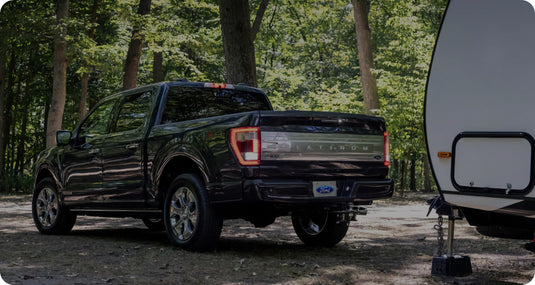
Trailer Electrical & Wiring
Trailer Electrical & Wiring – RV Trader Accessories Store
Trailer lighting isn't optional - federal law requires every towed trailer to have functioning running lights, turn signals, and brake lights visible to other drivers. Whether you're wiring a new tow vehicle for the first time, replacing a corroded connector, upgrading a trailer's lights to LED, or troubleshooting why the brake controller signal isn't reaching the trailer, the components start here.
This is the largest collection on the accessories store - over 1,100 in-stock items covering vehicle-specific T-connectors and tow harness kits, plugs and adapters in every pin configuration, brake controls and wiring, trailer and RV lighting (LED and incandescent), interior lighting, battery products, bulk wire, circuit breakers, and wiring clips. Components come from Curt Manufacturing, Draw-Tite, Hopkins, Blue Ox, Bargman, and Rigid Hitch - brands that trailer shops and experienced towers stock and trust.
Looking for the trailer to wire up? Browse travel trailers, fifth wheels, and toy haulers on RVTrader.com.
Trailer Wiring Connectors: Understanding the Pin Configurations
The connector between your tow vehicle and trailer is where every trailer lighting and brake circuit lives. Getting the pin count right is the first decision - it determines what functions are available, what accessories work, and whether your brake controller can communicate with the trailer at all.
4-Way Flat - The simplest and most common connector for basic trailer lighting. Carries four circuits: running/tail lights (brown), left turn and brake (yellow), right turn and brake (green), and ground (white). Appropriate for light utility trailers, small boat trailers, and any trailer that doesn't have electric brakes or require auxiliary power. The 4-flat is the standard output on most T-connector vehicle harnesses - adapters can step it up to 5, 6, or 7-way for additional functions.
5-Way Flat - Adds a fifth circuit (typically blue) for reverse light output, most commonly used on boat trailers with hydraulic surge brakes. The reverse wire connects to a solenoid that locks out the surge brakes when backing - preventing the trailer brakes from engaging when you're backing down a ramp.
6-Way Round - Adds electric brake control and 12V auxiliary power to the basic lighting circuits. Common on horse trailers, older livestock trailers, and some enclosed cargo trailers. The 6-way round is less common on newer trailers, most of which have moved to the 7-way RV standard.
7-Way RV Blade - The standard for travel trailers, fifth wheels, toy haulers, and any trailer with electric brakes. Carries seven circuits: tail lights, left turn/brake, right turn/brake, ground, electric brake controller output (blue), 12V battery charge (black), and reverse lights (purple). The RV blade style uses flat blade pins and is the most common format on late-model trucks and SUVs. Not interchangeable with 7-way round pin connectors - the pin layout differs.
7-Way Round Pin - Same seven functions as the RV blade but uses round pins rather than flat blades. Common on older trucks and some commercial/agricultural applications. Adapters in this collection bridge between round pin and RV blade formats when the tow vehicle and trailer don't match.
How to Connect Trailer Wiring to Your Tow Vehicle
There are two approaches to adding a trailer wiring connection to a vehicle that doesn't have one: a T-connector (plug-in harness) or a hardwire kit. Both end up in the same place - a standard trailer connector hanging at the rear of the vehicle. The difference is how they get there.
T-Connectors and Tow Harness Packages
A T-connector is a vehicle-specific harness that plugs into the tow vehicle's existing taillight assembly using OEM-style connectors - no cutting, splicing, or soldering required. It bridges the factory taillight wiring and branches off a trailer output. The result is a 4-way flat (or 7-way, depending on the kit) hanging at the rear of the vehicle, ready to connect to the trailer.
T-connectors are the standard starting point for most recreational towing setups. They're fast to install (typically 30-60 minutes), reversible if you sell the vehicle, and circuit-protected on modern designs to prevent feedback into the tow vehicle's electrical system. The ModuLite HD module used in several Draw-Tite kits in this collection specifically protects against reverse current and interference from the vehicle's CAN-bus electrical architecture - a genuine issue on newer vehicles with LED taillights and complex electronics.
Vehicle-specific tow harness packages in this collection combine the T-connector with a 7-way socket extension or complete wiring solution for trucks that need an additional connector in the bed or a full harness replacement. Confirmed fitments in this collection include Toyota Highlander, Jeep Wrangler JK, Subaru Ascent, Nissan Rogue, select GMC and Chevrolet pickups, and Infiniti/Nissan sedan applications.
Plugs, Sockets, and Adapters
When the connector on your tow vehicle doesn't match the plug on your trailer - or you need to replace a damaged connector - the plugs, sockets, and adapters subcategory has the solution. This collection covers:
- 7-way RV blade sockets - OEM replacement sockets that plug into the factory USCAR connector on late-model trucks and SUVs
- 7-way round pin connectors - for older trucks and commercial applications
- 7-way/6-way and 4-flat/6-way-round adapters - for cross-format compatibility when vehicle and trailer don't share the same connector style
- 4-way magnetic trailer harness connectors - a quick magnetic connection for temporary lighting setups
- Wiring extension harnesses - for GMC and Chevrolet pickups that need a 7-way socket added to the truck bed for fifth wheel and gooseneck towing
- ABS duty coiled extensions with 7-way round pin connectors for commercial trailer applications
Trailer Lighting: LED vs. Incandescent
Trailer lighting is the highest-volume subcategory in this collection - nearly 300 stop, turn, and marker light options. The choice between LED and incandescent comes down to longevity, current draw, and waterproofing needs.
LED trailer lights draw significantly less current than incandescent equivalents, which matters on trailers with multiple light circuits and brake controllers that monitor current to detect bulb failures. LEDs last far longer - typically 50,000 hours versus 1,000-2,000 for incandescent - and most sealed LED units are inherently more water-resistant. Submersible LED tail light kits for "under 80" trailers (narrower than 80 inches wide) and combination LED tail light assemblies for full-size trailers over 80 inches are both represented in this collection.
Incandescent lights cost less upfront and are straightforward to replace anywhere. For trailers that see light seasonal use and are stored properly, incandescent is a reasonable choice. Replacement #1076 incandescent bulbs for common trailer applications are stocked here.
Common trailer light configurations in this collection:
- 4" round LED stop/turn/tail - a standard single-function replacement for most light-duty trailers
- Oval 6" LED tail light kits - a common format on utility, equipment, and boat trailers
- Rectangular submersible LED tail kits for under-80" trailers
- Combination LED tail lights (stop, turn, tail, and license plate illuminator in one assembly) for full-size RVs and trailers
- Thin-line LED tail lights for low-profile applications
- Square and rectangular combination tail lights for trailers with non-standard mounting geometry
- LED clearance and side marker lights (amber) for trailers required to display lateral visibility lighting
- RV combination tail lights (driver and passenger side pairs) for motorhomes and large RV trailers
- Peterson stop/turn/tail pairs for trucks, trailers, and RVs using the 440 series format
Interior Lighting and Work Lights
Beyond trailer-to-vehicle signal circuits, this collection covers interior and auxiliary lighting for enclosed trailers, cargo haulers, and RV applications:
- 12V LED single lights for RV and enclosed trailer interior use
- Rectangle LED work lights for utility trailers, service bodies, and work trucks requiring directed task lighting
- Optronics low-profile combination RV tail lights (white base, pair) - a standard RV tail light replacement
- Aluminum diamond plate dual light mounting boxes for 6-1/2" oval lights on heavy-duty trailer applications
- Long-life halogen headlight bulbs for specific vehicle applications
Brake Controls, Wiring, and Battery Products
Brake Control Wiring
Brake controllers require a dedicated circuit from the tow vehicle's brake light signal and battery to send proportional voltage to the trailer's brake magnets. The blue wire on a 7-way connector carries the controller's output signal to the trailer. Brake control wiring components in this collection cover the tow vehicle side - the harness connections and breakout kits needed to connect a brake controller to the vehicle's electrical system - as well as replacement and extension brake control wiring for the trailer side.
Battery Products
Trailer battery products in this collection cover storage, protection, and connection hardware - battery boxes (large RV-style with lid and strap), battery hold-down straps with hardware, and the breakaway system battery covered in the RV & Trailer Parts collection. A charged trailer battery is required for breakaway systems to function on electric brake trailers - it's the power source for emergency braking if the trailer separates from the tow vehicle.
Circuit Breakers and Bulk Wire
ATC blade circuit breakers (15 amp) and bulk wire by the foot round out the electrical hardware side. Bulk wire and frame wiring clips are here for trailer rewiring projects and custom lighting builds - 25-packs of frame clips make routing and securing wiring along trailer frame rails straightforward.
Choosing the Right Connector for Your Setup
Towing a basic utility, landscape, or light boat trailer without electric brakes: A 4-way flat is all you need. A T-connector for your vehicle is the cleanest install.
Towing a boat trailer with hydraulic surge brakes: A 5-way flat adds the reverse lockout wire that prevents surge brake engagement when backing to the ramp.
Towing a travel trailer, fifth wheel, or toy hauler with electric brakes: You need a 7-way RV blade connection - on both the tow vehicle and the trailer. This is the only pin format that carries the brake controller signal (blue wire). If your vehicle only has a 4-flat from the factory, an upgrade to a 7-way is required before the brake controller can reach the trailer.
Mismatched connectors between vehicle and trailer: An adapter is the fastest fix. The 7-way/6-way adapter, 4-flat to 6-way round, and 7-way RV blade to 7-way round pin adapters in this collection cover the most common cross-format situations without rewiring either vehicle.
FAQ
What trailer wiring connector do I need? Match your connector to the functions your trailer requires. A 4-way flat covers lighting only - running lights, turn signals, brake lights, and ground. A 7-way RV blade is required for any trailer with electric brakes, as it carries the brake controller output on the blue wire. If your tow vehicle has a 4-flat and your trailer needs a 7-way, a tow harness upgrade is needed - an adapter won't add the brake circuit if the vehicle-side wiring doesn't carry it.
What is a T-connector for trailer wiring? A T-connector (also called a tow harness or custom wiring harness) is a vehicle-specific plug-in harness that connects to the tow vehicle's existing taillight assembly without cutting or splicing. It bridges the factory taillight wiring and provides a standard trailer connector output - typically a 4-way flat. No special tools or wiring experience required for most installations.
What is the difference between a 7-way RV blade and a 7-way round pin connector? Both carry the same seven circuits (lights, brakes, ground, 12V charge, reverse), but the connectors are physically different and not interchangeable. RV blade connectors use flat blade pins and are standard on most late-model trucks and travel trailers. Round pin connectors use cylindrical pins and are common on older trucks and some commercial trailers. Adapters bridge the two formats.
Do I need trailer wiring if my vehicle has a factory tow package? Many factory tow packages include a 7-way socket at the rear of the vehicle, in which case no additional wiring harness is needed. If the factory tow package only includes a 4-flat, or if your vehicle doesn't have a tow package, a T-connector or tow harness is required before you can tow legally. Some newer trucks have a USCAR socket that requires an OEM-style 7-way RV socket to convert to the standard trailer format.
Why aren't my trailer lights working? The most common causes are a bad ground connection (the white wire), a corroded or damaged connector, a blown circuit breaker or fuse in the tow vehicle's trailer circuit, or a failed converter if the tow vehicle uses LED taillights (which require a converter to run incandescent trailer lights). Start by checking the ground connection and cleaning both ends of the connector. If the connector looks clean and the ground is solid, test the tow vehicle's trailer wiring circuit at the socket before assuming the fault is on the trailer.
What does the blue wire on a trailer connector do? The blue wire on a 6-way or 7-way connector carries the brake controller output signal from the tow vehicle to the trailer's electric brake magnets. This wire is not present on a 4-way flat - which is why a 4-flat connector cannot support electric trailer brakes regardless of adapter use. The brake controller in the tow vehicle sends proportional voltage down this wire when the vehicle decelerates.
Can I use LED trailer lights with my existing wiring? Yes, in most cases. LED lights draw much less current than incandescent, which can cause issues on tow vehicles that use bulb-out detection - the lower current draw may trigger a false "trailer light out" warning on the dash. A load resistor or LED-compatible converter resolves this. On tow vehicles with LED taillights and a T-connector, a ModuLite-style circuit protector (included in several harness kits in this collection) is also recommended to prevent the LED taillight system from interfering with the trailer circuit.
What is a trailer wiring adapter? A wiring adapter bridges two different connector formats without rewiring either vehicle. Common examples: a 7-way RV blade to 4-way flat adapter (for trailers with only a 4-flat plug connecting to a 7-way socket), a 7-way to 6-way adapter, and a 4-flat to 6-way round pin adapter. Adapters transfer the circuits that are common to both formats - they cannot add circuits that don't exist on the vehicle side.
Ready to get your tow vehicle wired? Browse the full Trailer Electrical & Wiring collection above and use the fitment filter for vehicle-specific T-connectors and tow harness packages. Once the vehicle connection is sorted, the trailer hitches collection has the receiver hitches, ball mounts, and hitch pins to complete the towing setup.
For more on what a solid towing setup looks like before you head out, RVTrader's hitch types and ratings guide and 5 common trailer hitch mistakes to avoid cover the full picture from hitch to wiring. And if you haven't found your trailer yet, search RVs on RVTrader.com to find the travel trailer, fifth wheel, or toy hauler that fits your setup.
